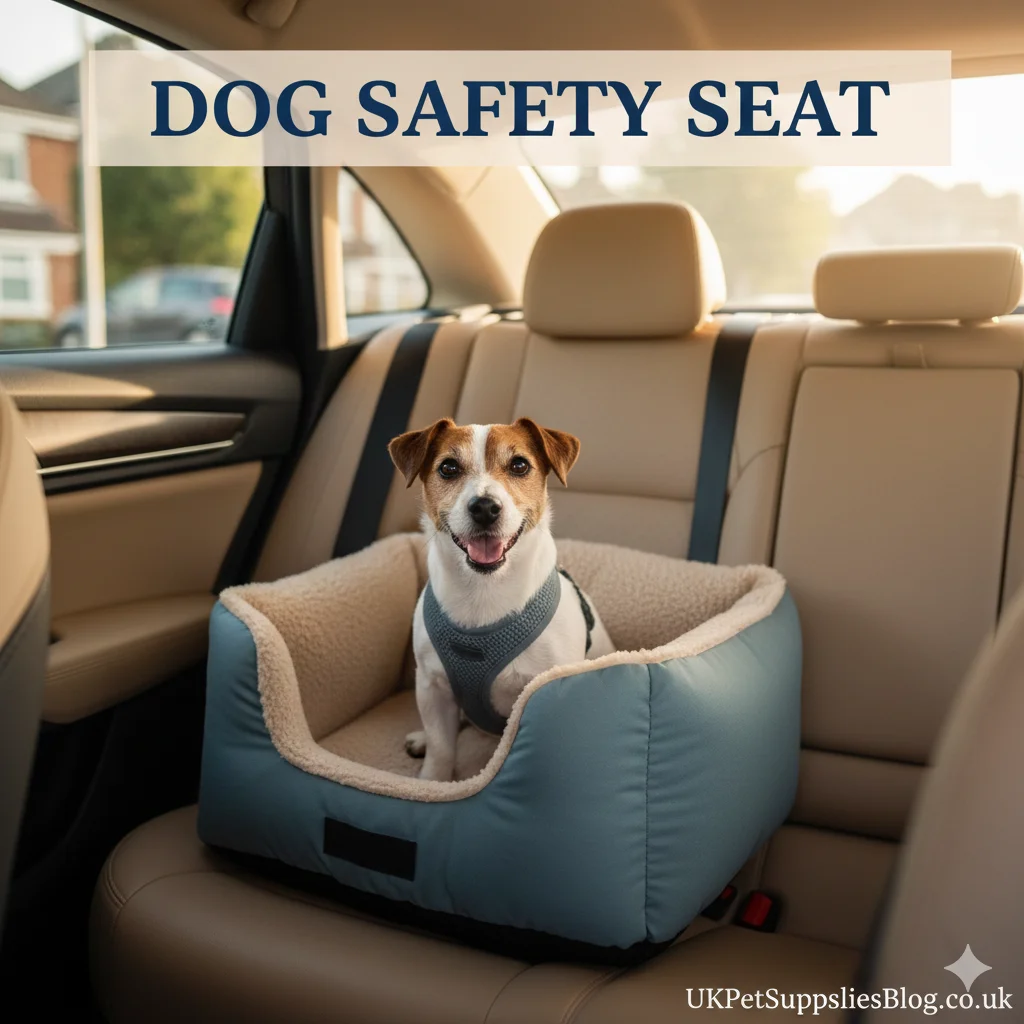

Have you ever taken your dog on a short drive to the park and wondered if they are actually safe in the car? Many UK pet owners assume that letting a dog sit on the back seat or in the boot is good enough. In reality, sudden braking or a minor collision can put both you and your dog at serious risk. A dog safety seat for car travel is not just about comfort. It is about protection, legality and peace of mind. In this article, we answer the most searched questions UK owners ask and explain how to choose a dog safety seat that truly works.
Why Most Dog Safety Seats for Cars Do Not Work
Many products look secure but fail in real situations. Some seats rely on weak straps. Others clip onto collars instead of harnesses. This can cause injury during sudden stops.
Another common issue is poor fit. A seat designed for small dogs may be marketed as suitable for all breeds. This leads to instability and stress for the dog.
UK vets and dog trainers often warn that a poorly designed dog safety seat for car use can be worse than no restraint at all.
What Is the Safest Way for a Dog to Ride in a Car?
Using a Dog Safety Seat with a Harness
The safest option is a dog safety seat used with a crash tested harness. The harness should attach to the car seat belt system, not the dog’s collar.
Look for seats that keep your dog facing forward or slightly sideways. This reduces strain on the neck and spine.
Dog Car Seat Safety Harness Explained
A dog car seat safety harness spreads force across the chest and shoulders. This is far safer than a single-point restraint.
Some UK-approved harnesses are tested to European safety standards. Always check product details before buying.
Are Dogs Safer in the Boot or the Back Seat?
For most dogs, the back seat is safer than the boot. The boot can be suitable for large dogs but only when fitted with a proper dog guard and harness system.
Small and medium dogs are safest in the back seat using a dog safety seat for car travel. This keeps them secure and visible, which can also reduce anxiety.
Is It a Legal Requirement to Strap a Dog in a Car in the UK?
Yes. Under the UK Highway Code Rule 57, dogs must be suitably restrained when travelling in a vehicle.
An unrestrained dog can distract the driver and cause an accident. Failing to restrain your dog can result in fines and points on your licence.
Using a dog safety seat for car journeys helps you comply with the law and protect everyone in the vehicle.
Is It Illegal for a Dog to Travel Unrestrained in a Car?
Yes. Allowing a dog to travel unrestrained is considered unsafe and illegal in the UK.
This includes letting a dog sit freely on the back seat or move between seats while driving.
Can Dogs Sit on a Passenger’s Lap in a Car?
No. A dog sitting on a passenger’s lap is not legally restrained and poses a serious risk.
In the event of airbag deployment, the dog could be badly injured. This applies even on short journeys.
Are Dogs Allowed in the Front Seat of a Car in the UK?
Dogs can sit in the front seat only if properly restrained and if airbags are switched off.
Most safety experts recommend the back seat instead. A dog safety seat for car use in the back seat is generally the safest option.
What Is the Safest Dog Seat in a Car?
The safest dog seat is one that is size appropriate, securely anchored and used with a crash tested harness.
Best Dog Safety Car Seat Features to Look For
Strong anchor points that attach to the seat belt system
High sides for support and comfort
Non slip base
Compatibility with a dog car seat safety harness
UK pet owners often choose brands available through trusted retailers like Pets at Home or independent pet shops that follow safety standards.
What Is the Most Secure Dog Car Seat for Small Dogs?
A small dog safety car seat should act like a booster seat. It allows your dog to sit comfortably while being fully restrained.
Seats with built in clips that attach to a harness work well for breeds like Pugs, French Bulldogs and Miniature Dachshunds.
What Is the Best Restraint for a Dog in a Car?
The best restraint combines a dog safety seat for car travel with a harness designed for vehicle use.
Avoid attaching seat belts directly to collars. This can cause serious neck injuries.
Why Do Some Dog Trainers Not Recommend Harnesses?
Trainers usually warn against poorly fitted harnesses or those designed only for walking.
A proper car harness is different. It is built to handle impact and sudden movement.
When fitted correctly, a car harness is one of the safest restraint options available.
Understanding Common Dog Travel Rules and Myths
What Is the 3 3 3 Rule with Dogs?
This rule refers to how dogs adjust to new environments. Three days to decompress, three weeks to settle, three months to feel at home.
It does not replace the need for safe travel equipment.
What Is the 7 7 7 Rule for Dogs?
This often relates to training and routine, not car safety. It should not be confused with travel rules.
What Is the 7 Second Rule for Dogs?
This usually applies to food safety or training timing, not car journeys.
Tips for Stress Free Car Travel with Your Dog
Introduce the dog safety seat gradually. Let your dog sit in it at home first.
Take short trips before longer journeys.
Use familiar blankets or toys for comfort.
Never leave your dog alone in a parked car.
If you are planning longer trips, check out our guide on healthy dog treats for travel rewards.
Conclusion
A dog safety seat for car travel is not a luxury. It is a necessity for responsible UK dog owners. Many products fail because they prioritise looks over safety. By choosing a well fitted seat, using a proper harness and following UK travel laws, you protect your dog and everyone else on the road. Take time to choose the right option and make every journey safer. Explore our other dog care articles for more practical advice on keeping your pet happy and secure.