
Choosing the right food for your cat is one of the most important decisions a UK cat owner can make. With so many options available in Tesco, Asda, Sainsbury’s, and online stores, it can be confusing to know which is best. One commonly found option is Whiskas dry food for cats, praised for convenience and affordability. But is it the healthiest choice for your feline friend? In this article, we answer the most common questions, explore its nutritional benefits, and compare it with other popular dry cat foods in the UK.
What Is Whiskas Dry Food for Cats?
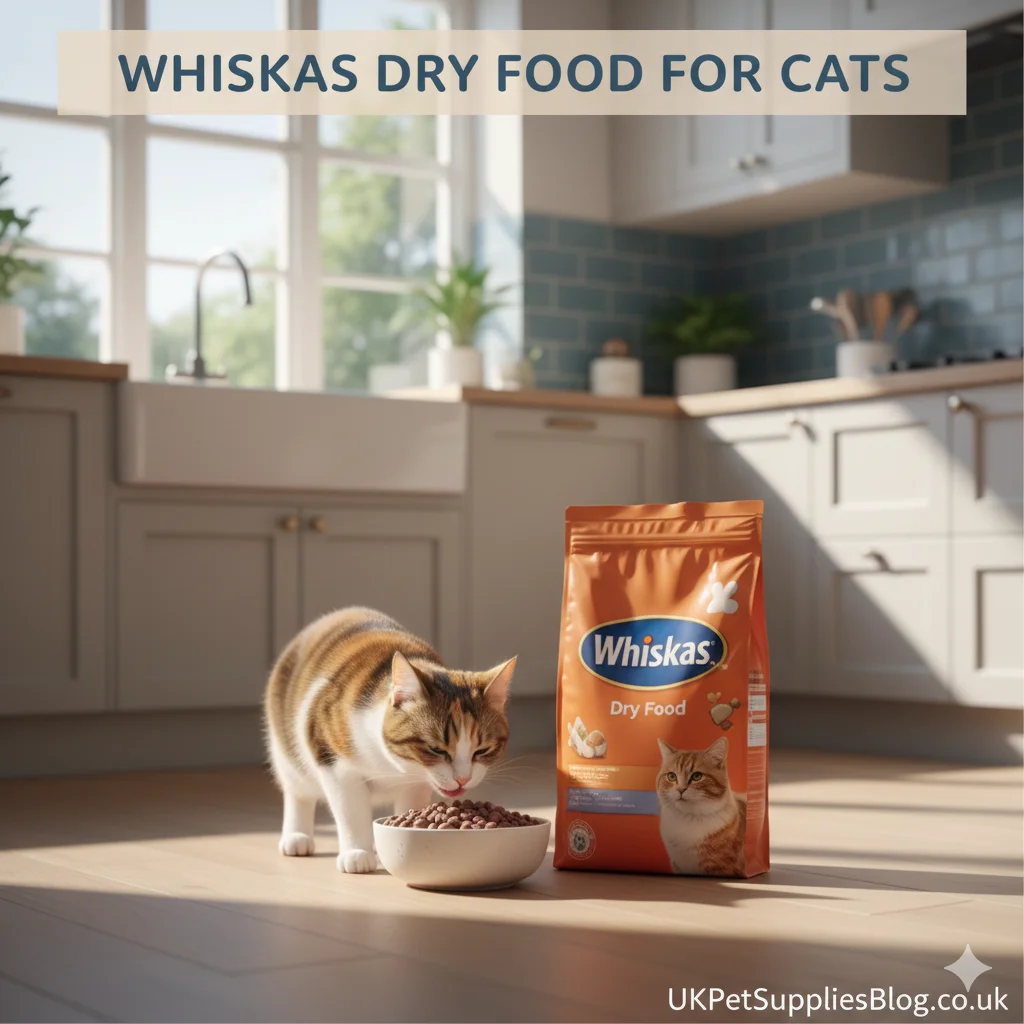
Whiskas dry food is a kibble-based option formulated for kittens, adult cats, and senior cats. It comes in a variety of flavours such as tuna, chicken, and mixed varieties. Dry food is popular because it is easy to store, serves as a convenient main meal or snack, and can help maintain dental health by reducing plaque buildup.
Types of Whiskas Dry Food
- Whiskas 1+ Adult Cats: Designed for cats over one year old, available in tuna and chicken flavours.
- Kitten Formula: Higher in protein and fat to support growth and development.
- Senior Formula: Lower in fat with adjusted nutrients for older cats.
Is Whiskas Dry Food Good for Your Cat?
Nutritional Value
Whiskas dry food provides a balanced mix of protein, carbohydrates, fats, and essential vitamins. It is suitable for cats without specific health concerns and can be part of a varied diet that includes wet food.
Health Considerations
- Weight Management: Portion control is important, as dry food is calorie-dense.
- Hydration: Ensure cats have access to fresh water, as dry food alone does not provide adequate moisture.
- Sensitive Cats: Cats with kidney issues or urinary problems may benefit from vet-recommended brands with higher moisture content.
Comparing Whiskas to Other Brands
- Whiskas vs Felix: Felix is often seen as more premium with higher protein and less filler, but both brands are widely used in UK homes.
- Premium Alternatives: Royal Canin, James Wellbeloved, and Lily’s Kitchen are considered higher-quality dry foods recommended by UK vets.
Feeding Guidelines for Whiskas Dry Food
- Adult Cats: Generally, 40–60g per day depending on weight and activity.
- Kittens: 50–70g per day, split across multiple small meals.
- Senior Cats: Follow the packaging instructions and adjust based on activity level.
Mixing Dry and Wet Food
Many UK owners combine dry kibble with wet pouches or tins for balanced hydration, taste, and variety. Transition gradually when introducing new textures or flavours to avoid stomach upset.
Where to Buy Whiskas Dry Food in the UK
- Supermarkets: Tesco, Asda, Sainsbury’s, Morrisons, Farmfoods, and B&M.
- Online Retailers: Amazon UK offers convenient bulk packs and subscriptions for regular delivery.
- Local Pet Shops: Often provide expert advice on portioning and flavour options.
Common Concerns About Whiskas Dry Food
- Overfeeding: Measure portions carefully to prevent obesity, common in indoor cats.
- Sensitive Stomachs: Cats prone to diarrhoea or vomiting may need alternative formulas.
- Grain-Free Diets: Most vets recommend balanced grain-containing foods unless a medical condition requires otherwise.
Conclusion
Whiskas dry food for cats is a convenient and widely available option for UK pet owners. While it provides essential nutrients for many cats, it may not be the best choice for cats with special dietary needs or those requiring premium nutrition. Always consider your cat’s age, health, and lifestyle, and consult your vet for tailored advice. For more tips on balanced diets and healthy feeding habits, explore our guides on cat nutrition and feeding schedules.