
Introduction
Your indoor cat depends entirely on you to make the right nutritional choices. Whether you live in a cozy London flat or a countryside home, selecting the best cat food for indoor cats UK isn’t just about picking the first tin from the shelf at Pets at Home—it’s about understanding what your feline friend truly needs to thrive indoors.
Indoor cats face unique challenges. They burn fewer calories than outdoor explorers, they’re prone to hairballs from excessive grooming, and they need food that supports a slower metabolism. The good news? There’s never been more choice or better science behind cat nutrition. This guide breaks down everything you need to know, answering the questions cat owners in the UK ask most often.
What Is the Best Cat Food for Indoor Cats in the UK?
The best cat food for indoor cats UK isn’t one-size-fits-all—it depends on your cat’s age, weight, and sensitivities. However, several brands consistently rank at the top of both vet recommendations and pet owner reviews:
Royal Canin Indoor 27 leads the pack for good reason. This dry formula is specifically formulated for cats with low activity levels, helping them maintain a healthy weight while reducing litter box odours. Vets across the UK recommend it because it’s backed by decades of scientific research and clinical trials.
Hill’s Science Plan offers excellent alternatives, particularly their Sterilised Adult formula for neutered cats and their Hairball & Perfect Coat range for indoor breeds prone to hairballs. The brand invests heavily in digestive research, making it ideal for cats with sensitive stomachs.
Purina ONE Indoor Formula provides a budget-friendly option without compromising nutrition. The chicken or turkey varieties offer high-quality protein while supporting weight management—crucial for cats spending most of their time indoors.
IAMS Advanced Nutrition Indoor tackles one of indoor cat owners’ biggest complaints: litter box odour control. Its formula includes special ingredients to reduce ammonia smell, making life easier for both you and your cat.
These brands all meet AAFCO standards and follow World Small Animal Veterinary Association (WSAVA) guidelines, ensuring your cat receives complete, balanced nutrition.
Why Do Vets Always Recommend Royal Canin for Cats?
This is a question many UK cat owners ask. The answer is straightforward: vets recommend Royal Canin because it works.
Royal Canin invests more in research and development than most pet food companies. They employ teams of veterinarians, nutritionists, and scientists who develop specialised formulas for specific health conditions and life stages. Their prescription diets—available only through vets—are particularly effective for cats with kidney problems, digestive issues, or urinary concerns.
The brand also maintains exceptionally strict quality control. Every batch is tested for consistency, ensuring your cat receives the same balanced nutrition with every meal. For cats with food sensitivities or medical conditions, this consistency is vital.
Additionally, Royal Canin’s scientific backing means vets feel confident recommending it. They’ve seen the results in their surgeries—healthier coats, better weights, and improved digestive health.
What Is the Number One Healthiest Cat Food for Indoor Cats?
The healthiest diet for a house cat emphasises real meat as the first ingredient, combined with controlled calories and digestive support. Look for foods containing:
- High-quality animal proteins (chicken, turkey, salmon, fish)
- Balanced fibre from natural sources like chicory root inulin
- Omega-3 and omega-6 fatty acids for coat health
- Prebiotics to support healthy gut bacteria
For indoor cats specifically, you want a formula that prevents weight gain without sacrificing nutrition. Hill’s Science Plan’s Metabolic range and Royal Canin Indoor 27 both excel here, offering clinically proven weight management while maintaining lean muscle mass.
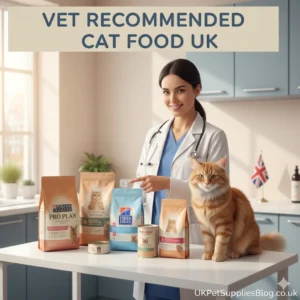
What Cat Food Do UK Vets Recommend?
Beyond Royal Canin, UK vets frequently recommend:
- Hill’s Science Plan (especially for sensitive stomachs and hairball control)
- Purina Pro Plan (particularly their digestive care range)
- IAMS (for weight management in indoor cats)
- Lily’s Kitchen (a British premium brand favoured by holistic vets)
The key is asking your vet about your specific cat. They know your pet’s medical history and can recommend accordingly.
Wet vs. Dry Food for Indoor Cats
Both formats have advantages. Dry food supports dental health and is convenient to leave out in timed feeders. Wet food provides hydration and is closer to a cat’s natural diet.
Many UK vets recommend mixing both—perhaps 2 pouches of wet food per day supplemented with dry kibble. This combination helps with hydration while allowing portion control through measured servings.
The Silent Killer: Obesity in Indoor Cats
Indoor cats often gain weight too quickly. Extra weight leads to diabetes, joint problems, and heart disease—hence why it’s often called the “silent killer” of indoor cats.
Preventing obesity is far easier than treating it. Feed measured portions, use puzzle feeders to encourage activity, and choose weight-management formulas designed for indoor cats.
What Should You Never Feed Your Cat?
Understanding foods to avoid is as important as knowing what to feed:
- Raw meat, fish, and eggs – Risk of harmful bacteria like Salmonella and E. coli
- Raw pork – Can carry parasites causing trichinosis
- Processed meats – Often contain toxic ingredients like onion powder and excess salt
- Excessive liver – Can cause vitamin A toxicity
- Cooked bones – Splinter and cause internal injuries
- Chocolate, grapes, onions, garlic – All toxic to cats
Cooked chicken is safe in small amounts as an occasional treat, but feeding only chicken leads to nutritional deficiencies. Your cat needs taurine, essential for heart health and vision—something whole chicken doesn’t provide.
Indoor Cats and Hairballs: What’s the Solution?
Hairballs are incredibly common in indoor cats. Specialised hairball control formulas from Hill’s Science Plan, Royal Canin Intense Hairball, and Eukanuba Hairball Control contain extra fibre and prebiotics that help hair pass naturally through the digestive system.
Regular grooming remains the best prevention, especially for long-haired breeds. But coupled with the right food, hairballs become far less of a problem.
What’s the Best Food for a Cat That Throws Up?
If your cat frequently vomits, it’s usually digestive sensitivity. Switch to a limited-ingredient diet with easily digestible proteins like chicken, turkey, or salmon.
Royal Canin Digestive Care and Hill’s Science Plan Sensitive Stomach & Skin are both excellent choices. These formulas use high-quality proteins, reduced fat, and added prebiotics to soothe the digestive system.
Should You Leave Dry Food Out All Day?
For indoor cats in smaller homes, free-feeding can lead to overeating. Instead, use measured portions at set meal times or invest in timed feeders. This prevents weight gain and gives you better control over your cat’s nutrition.
A Quick Note on the 3-3-3 Rule
You might hear about the “3-3-3 rule” for cats—but this actually refers to cat adoption adjustment, not nutrition. It suggests cats take 3 days to feel safe, 3 weeks to show personality, and 3 months to fully settle. When transitioning food, use a 7-day period, mixing old and new food gradually.
Conclusion: Your Indoor Cat Deserves the Best
Finding the best cat food for indoor cats UK means choosing formulas backed by science and proven by vets. Royal Canin Indoor, Hill’s Science Plan, and Purina ONE consistently deliver results. Focus on complete, balanced nutrition, watch portion sizes to prevent obesity, and don’t hesitate to consult your vet about your cat’s specific needs.
Your indoor companion relies on you entirely for their health and happiness. With so many excellent options available at Pets at Home, online retailers, and your local vet surgery, giving them nutritional excellence is easier than ever.
Ready to explore more expert guides on keeping your UK cats healthy and thriving? Discover our full range of cat care resources and nutrition tips designed for British pet owners.