
Have you ever watched your dog look for a cosy corner when the rain starts tapping on the garden fence? Many UK pet owners face this exact moment. Whether you have a lively Labrador or a tiny Jack Russell, dog houses for dogs can offer a safe and comfortable space they can truly call their own. In Britain, where the weather can shift from sunshine to drizzle in minutes, choosing the right dog house is about more than looks. It is about warmth, protection and your dog’s wellbeing. This guide answers the most common questions UK owners ask so you can make a confident and informed choice.
Why Do Dogs Need a Dog House?
Dogs enjoy having a space that feels secure. A dog house gives them shelter from wind, rain and cold. It also offers shade during warmer months.
In the UK, damp weather is a bigger concern than extreme heat. A proper dog house helps keep your dog dry and reduces the risk of joint stiffness, especially in older dogs. Vets across the country often remind owners that cold and wet conditions can worsen arthritis.
A dog house can also support good behaviour. Dogs that have their own space are often calmer and less likely to dig or bark out of boredom.
Dog Houses for Large Dogs
What Size Dog House Does a Large Dog Need?
Dog houses for large dogs need enough room for your dog to stand, turn around and lie down comfortably. Breeds like German Shepherds, Rottweilers and Golden Retrievers benefit from extra headroom and wider door openings.
A good rule is to measure your dog from nose to tail and add at least 25 percent extra space. Height matters too. Your dog should not have to crouch inside.
Outdoor Dog Houses for Large Dogs
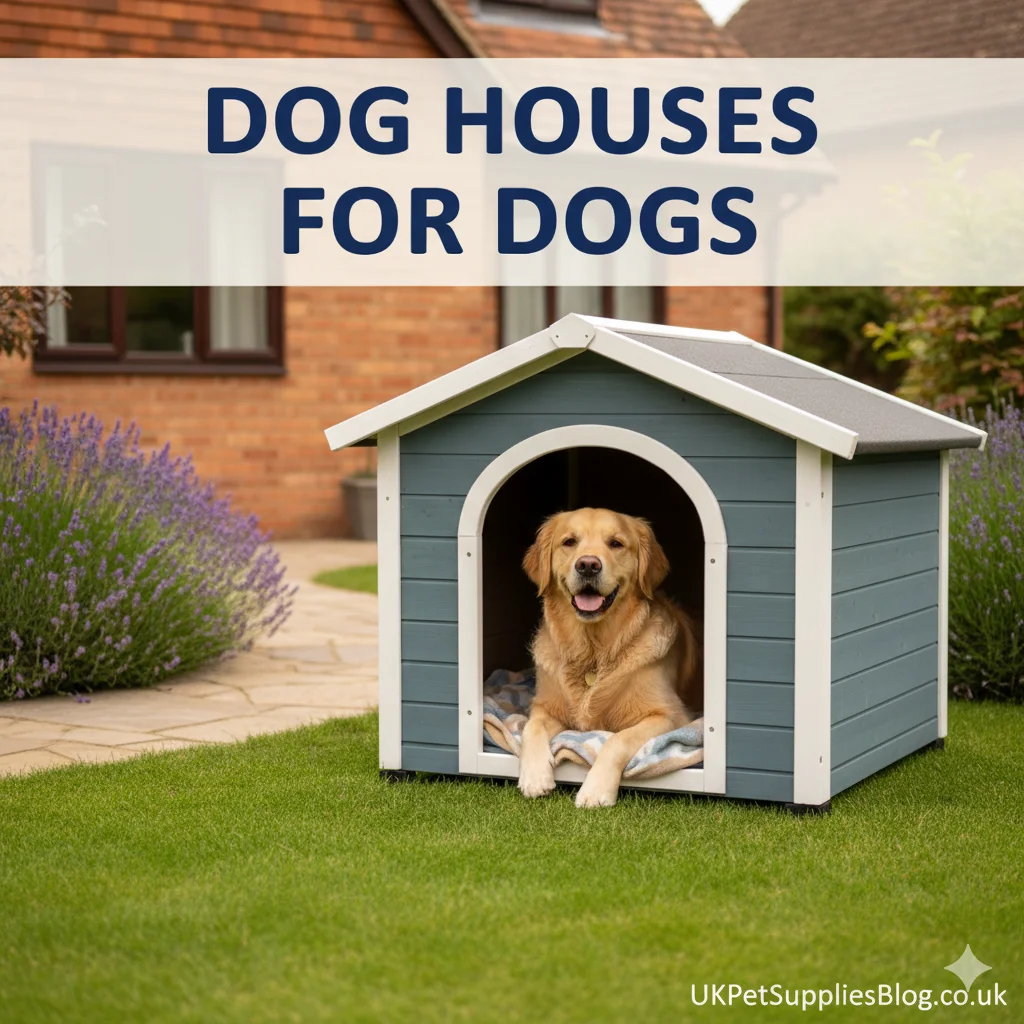
Outdoor dog houses for large dogs should be sturdy and well insulated. In the UK, timber dog houses are popular because they cope well with cold and damp when treated properly.
Look for raised floors. This keeps moisture from seeping in after heavy rain. Slanted roofs help water run off and reduce leaks. Many UK brands offer felted roofs designed for our climate.
Ventilation is important. Small vents prevent condensation without letting in draughts.
Indoor Dog Houses for Large Dogs
Indoor dog houses for large dogs are becoming more common. These are often used as cosy dens in kitchens or utility rooms.
They suit dogs that like privacy or feel anxious during fireworks or storms. Soft sided fabric houses or wooden crate style designs work well indoors and blend nicely with British home decor.
Dog Houses for Small Dogs
Dog Houses for Small Dogs Outdoors
Small dogs lose heat faster than large breeds. Dog houses for small dogs used outdoors need good insulation and a snug fit.
Breeds like Chihuahuas and Dachshunds should have a house that feels cosy rather than oversized. Adding vet approved bedding or straw in winter can make a big difference.
Many UK owners choose plastic dog houses for small dogs because they are easy to clean and resistant to damp.
Indoor Dog Houses for Small Dogs
Indoor dog houses for small dogs are ideal for flats and smaller homes. These give your dog a sense of security without taking up too much space.
Fabric houses with padded walls are popular and easy to move. They are perfect for dogs that enjoy curling up and staying warm.
Indoor vs Outdoor Dog Houses
Choosing between indoor and outdoor dog houses depends on your lifestyle and your dog’s habits.
Outdoor houses suit dogs that spend time in the garden. They should be weatherproof and durable. Indoor houses suit companion dogs that live mostly inside and want a quiet retreat.
Some UK owners use both. An outdoor house for garden time and an indoor one for evenings and nights.
Best Materials for Dog Houses in the UK
Wooden Dog Houses
Wooden dog houses are a favourite in Britain. They provide natural insulation and look good in most gardens.
Make sure the wood is treated with pet-safe sealant. Untreated wood can absorb moisture and rot over time.
Plastic Dog Houses
Plastic dog houses are lightweight and easy to clean. They work well in wet areas and coastal regions.
They do not insulate as well as wood, so extra bedding is important during colder months.
Fabric Dog Houses
Fabric dog houses are best for indoor use. They are soft, warm and often washable.
They are not suitable for outdoor use in the UK climate.
Where to Place a Dog House
Location matters. Place outdoor dog houses on level ground, ideally on paving or decking.
Avoid areas where water pools after rain. Position the entrance away from prevailing winds, which in most parts of the UK come from the west.
Indoors, place the house in a quiet corner away from draughts but not isolated from family life.
How to Make a Dog House More Comfortable
Add a raised bed or thick bedding. Wash bedding regularly to keep it dry and hygienic.
In winter, consider thermal liners designed for dog houses. In summer, ensure shade and airflow.
Regularly check for damage, damp or pests. A quick inspection after heavy rain can prevent bigger problems.
Are Dog Houses Safe All Year Round?
Yes, when chosen and maintained properly. Dog houses for dogs can be used year round in the UK.
During winter, insulation and bedding are key. During summer, shade and ventilation matter more.
If temperatures drop below freezing, most vets advise bringing dogs indoors overnight, especially small or elderly dogs.
Common Mistakes to Avoid
Buying a house that is too big. This makes it harder for dogs to stay warm.
Ignoring ventilation. Poor airflow leads to damp and mould.
Placing the house directly on soil or grass. This encourages moisture and cold.
Choosing style over function. A dog house must suit your dog, not just your garden.
Conclusion
Choosing the right dog houses for dogs is about understanding your pet, your home and the British climate. Whether you need dog houses for large dogs that live outdoors or indoor dog houses for small dogs who love a cosy corner, the right choice can improve comfort, health and happiness. Take time to measure, choose suitable materials and place the house carefully. Your dog will thank you for it. For more helpful advice, explore our other pet care guides and keep giving your dog the best life possible.