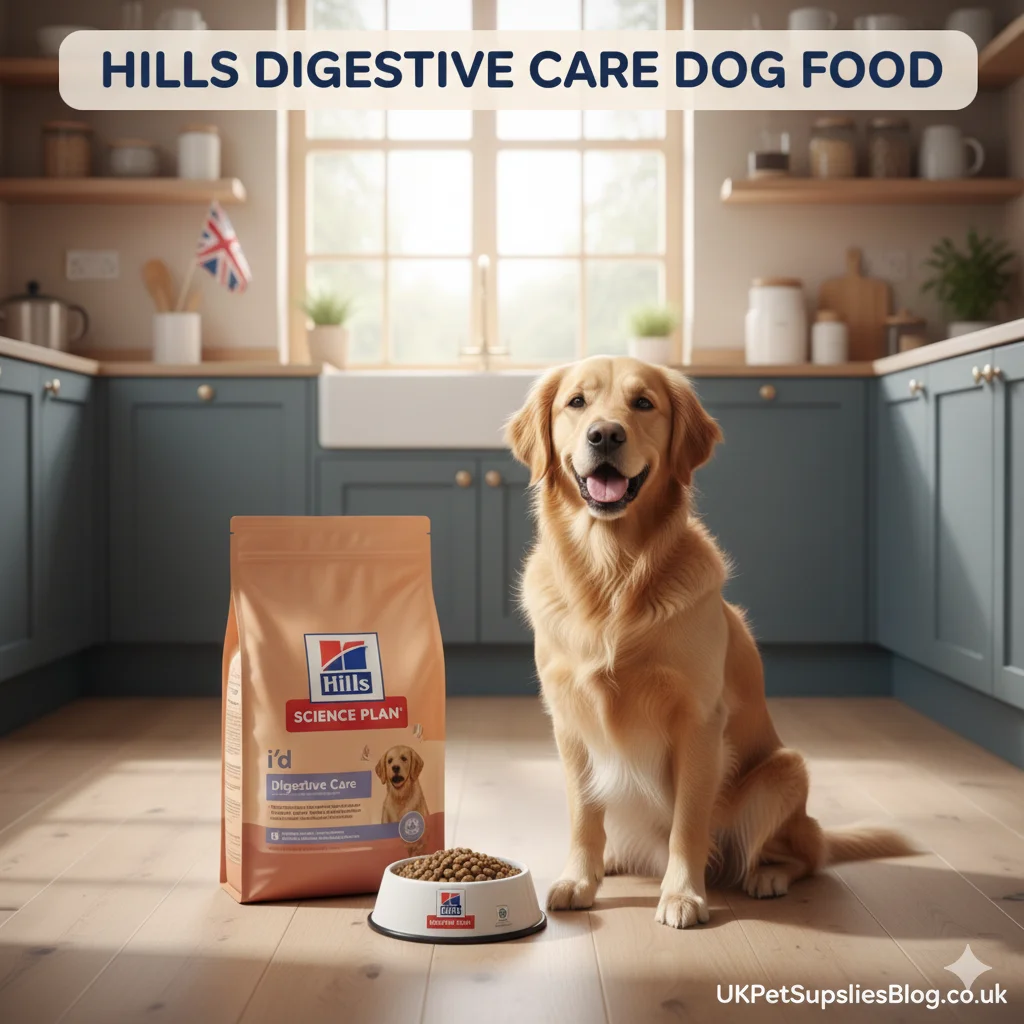

Few things worry a dog owner more than repeated loose stools on the kitchen floor or a Labrador who suddenly refuses his breakfast. Digestive problems are common in British dogs, whether they live in a city flat in Manchester or a damp countryside cottage in Devon. When vets suggest hills digestive care dog food, many owners want to know exactly what it is, how it works, and whether it is right for their dog.
This article looks closely at Hill’s Digestive Care options available in the UK, including low-fat i/d formulas, feeding advice, and how they compare with other brands you may already know from Pets at Home or your local independent pet shop.
What Is Hills Digestive Care Dog Food?
Hill’s Digestive Care usually refers to the Prescription Diet i/d range made by Hill’s Pet Nutrition. In the UK, this food is commonly recommended by veterinary practices for dogs with short-term or ongoing digestive issues.
It is different from standard supermarket food. It is designed to be highly digestible, meaning the nutrients are easier for the gut to absorb. That reduces strain on the digestive system.
You can read more about the wider brand in our detailed review of Hill’s Pet Nutrition dog food, which explains how their veterinary diets differ from everyday ranges.
Is Hills Digestive Care Vet Recommended?
Yes, in the UK it is widely used in veterinary clinics. Most small animal vets will stock or be able to order Hill’s Prescription Diet i/d. It is often recommended after:
- Acute diarrhoea
- Vomiting
- Pancreatitis
- Gastroenteritis
- Post surgery recovery
It is not sold as a casual lifestyle food. It is intended for dogs with diagnosed digestive problems and should ideally be used under veterinary guidance.
Which Dog Food Is Best for Digestive Issues?
There is no single food that suits every dog with a sensitive stomach. The right choice depends on the cause.
For mild food sensitivity, some dogs do well on carefully formulated over-the-counter options such as:
- Royal Canin UK Gastrointestinal ranges
- Wainwright’s sensitive recipes
- Harringtons sensitive
- Tails.com personalised plans
- Chappie, which many UK owners use for simple, low-fat feeding
For more serious or repeated digestive upset, vets often turn to Hill’s Digestive Care i/d because of its controlled fat levels, specific fibre blends, and proven digestibility.
If you are comparing options, our guide to the best dog food for sensitive stomachs in the UK breaks down different approaches in more detail.
Hills Digestive Care Dog Food Low Fat Options
One of the most searched versions is hills digestive care dog food low fat. This usually refers to Hill’s Prescription Diet i/d Low Fat.
Why Low Fat Matters
Fat is harder to digest than protein or carbohydrates. In conditions like pancreatitis, high-fat meals can trigger pain and inflammation.
Low-fat formulas are often used for:
- Pancreatitis
- Chronic diarrhoea linked to fat intolerance
- Some liver conditions
Hill’s i/d Low Fat is available in:
- Dry kibble
- Canned wet food
- Stew-style pouches in some UK retailers
You will often find hills digestive care low-fat canned dog food in vet practices and online through Zooplus UK.
Hills Digestive Care Fat Content
Exact fat percentages vary slightly between wet and dry formats. The low-fat dry version typically contains significantly less fat than standard adult kibble.
For comparison, many supermarket adult foods contain 12 to 18 per cent fat on a dry matter basis. Low-fat prescription diets are usually far lower.
Always check the label or ask your vet, especially if your dog has had pancreatitis. Even small differences can matter.
Hills Digestive Care Dog Food Feeding Guide
Owners often ask about hills digestive care dog food, feeding guide, and how much to feed.
Feeding amounts depend on:
- Your dog’s weight
- Whether they are underweight or overweight
- Activity level
- Whether the food is being used short-term or long-term
As a rough guide, a 20 kg adult dog on the dry i/d Low Fat might need around 250 to 300 grams per day, split into two or three meals. Wet food amounts differ because of moisture content.
Practical Feeding Instructions
When using hills digestive care dog food feeding instructions, follow these steps:
- Introduce gradually over five to seven days if your dog is stable.
- In acute diarrhoea, vets may advise starting immediately.
- Divide the daily allowance into smaller meals. Three or four small portions are easier on the gut than one large bowl.
- Ensure constant access to fresh water.
If your dog refuses the dry version, you can mix a small amount of hills digestive care id low fat canned dog food feeding guide portions with kibble to improve palatability.
Hills Digestive Care Dog Food for Diarrhoea
Loose stools are one of the most common reasons this food is prescribed.
What To Feed a Dog When Having Stomach Issues
In the past, many UK owners were told to feed boiled chicken and rice. While that can help in the short term, it is not nutritionally complete.
Hill’s Digestive Care i/d is balanced for longer use and contains:
- Easily digestible protein
- Prebiotic fibres
- Electrolytes
If your dog has diarrhoea lasting more than 24 hours, especially in puppies, older dogs, or breeds like Border Terriers that can dehydrate quickly, speak to your vet.
Signs of Digestive Issues in Dogs
Watch for:
- Repeated vomiting
- Loose or watery stools
- Blood or mucus in faeces
- Weight loss
- Excessive gas
- Lethargy
In damp UK winters, dogs often pick up stomach bugs after muddy park walks. Labradors and Cockapoos are notorious for eating things they should not.
Early dietary management can prevent a mild issue from becoming serious.
Is Wet Food Better for Dogs With Digestive Issues?
Many owners prefer hills digestive care id low fat wet dog food for dogs who are unwell.
Wet food can be helpful because:
- It is softer and easier to eat
- It contains more moisture, supporting hydration.
- It is often more appealing to dogs with reduced appetite.
However, some dogs do better on dry food because the fibre structure can help firm stools.
If you are unsure, ask your vet which format suits your dog’s specific condition.
If you are generally exploring wet feeding, our review of the best wet dog food in the UK covers non-prescription options too.
Hills Digestive Fiber Care Dog Food
Some dogs do not need low-fat. They need more fibre.
Hill’s also offers fibre-focused digestive formulas designed for dogs with:
- Colitis
- Irregular bowel movements
- Constipation
Fibre helps regulate stool consistency. For example, a Staffie living a mostly indoor lifestyle may benefit from controlled fibre intake if weight gain and sluggish digestion are issues.
Always match the formula to the diagnosis. Low-fat is not automatically right for every digestive case.
Do Vets Recommend Hills Dog Food?
This question comes up constantly in UK clinics.
Yes, many vets recommend Hill’s because:
- The brand funds nutritional research
- Prescription diets are tested in clinical settings.
- Nutrient levels are tightly controlled.
That does not mean it is the only good brand. Royal Canin UK and Purina Pro Plan Veterinary Diets are also widely used.
The reason vets often suggest Hill’s Digestive Care is not commission or marketing. It is because they have seen it work in real cases of pancreatitis, chronic diarrhoea, and post surgery recovery.
Is Hills Perfect Digestion Good for Dogs?
Hill’s Perfect Digestion is different from Prescription Diet i/d. It is sold over the counter and focuses on gut health for otherwise healthy dogs.
It can be suitable for:
- Dogs with mild digestive sensitivity
- Owners want better stool consistency.
- Breeds prone to tummy upsets, such as Cockapoos
If your dog has diagnosed with pancreatitis or severe chronic issues, Prescription Diet i/d is usually more appropriate.
How Long Can Dogs Stay on a Prescription Diet?
Many UK owners worry about long-term use.
Some dogs stay on Hill’s Digestive Care for:
- A few weeks after the illness
- Several months during recovery
- Lifelong management in chronic conditions
For example, a Labrador with repeated pancreatitis episodes may need long-term low-fat feeding.
Regular vet check-ups are important. Blood tests may be recommended to monitor liver and pancreatic values.
Is There a Problem With Hill’s Science Diet Dog Food?
From time to time, online forums discuss recalls or ingredient debates.
Hill’s has had recalls in the past, as most major pet food companies have. In the UK, products are regulated, and safety standards are strict.
If you ever have concerns:
- Check the Food Standards Agency website
- Contact Hill’s UK directly
- Speak to your vet
Avoid relying solely on social media claims.
What Is the Healthiest Dog Food in the UK?
There is no single number one healthiest dog food.
The healthiest food for your dog depends on:
- Age
- Breed
- Health conditions
- Activity level
- Weight
A working Border Collie in Northumberland will have different needs from a retired indoor Shih Tzu in London.
Some dogs thrive on high-quality commercial diets such as Lily’s Kitchen or Harringtons. Others need veterinary formulas like hills digestive care dog food because of medical issues.
For a broader comparison, see our overview of the best dog food options in the UK, where we compare brands across price points.
Practical Tips for Feeding Dogs With Digestive Problems
- Keep treats simple. Avoid fatty table scraps.
- Introduce new foods slowly.
- Stick to consistent meal times.
- Avoid sudden diet swaps unless advised by a vet.
- Monitor stool quality daily.
Even healthy snacks matter. If you are giving fruit treats, read our guide on whether dogs can eat blueberries to ensure they are safe and suitable.
Comparing Hills Digestive Care With Other UK Options
Chappie is often used as a gentle, low-fat option. It is affordable and available in most supermarkets. You can read more in our Chappie dog food review.
Wainwrights offers grain-free and sensitive recipes, often found in Pets at Home.
Tails.com creates personalised plans based on your dog’s profile, which may suit mild digestive sensitivity.
Hill’s Digestive Care stands out when there is a diagnosed medical issue requiring precise nutrient control.
Final Thoughts for UK Dog Owners
Digestive problems are stressful. Cleaning up after a sick dog at two in the morning while worrying about dehydration is something most owners experience at least once.
Hill’s Digestive Care dog food has a clear role in UK veterinary practice. It is not for every dog, and it is not a miracle cure. It is a clinically designed diet that supports recovery and management of specific gut conditions.
If your dog has persistent vomiting, diarrhoea, or has been diagnosed with pancreatitis, speak to your vet about whether hills digestive care dog food is appropriate.
For everyday feeding advice and comparisons with other brands available across the UK, you can explore our other dog nutrition articles to help you make informed decisions for your own dog’s health and comfort.