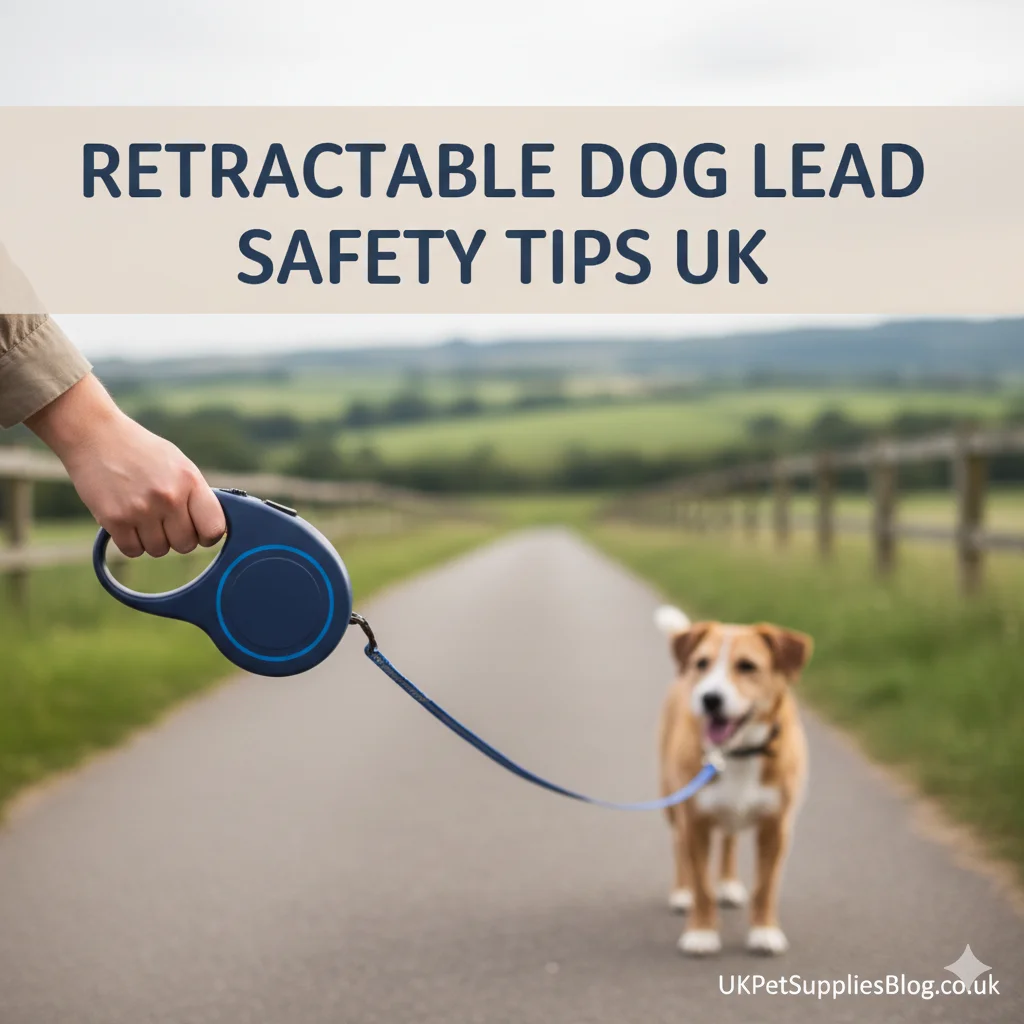

It is important that you have a good time as you bring your dog, but you have to get a suitable lead. Retractable dog leads promise alluring flexibility and freedom, but they have expressed a divided opinion amongst the UK vets, dog trainers and animal welfare organisations. Suppose you are thinking of using a retractable dog lead in the UK; it is essential to be aware of the safety hazards and practices.
The retractable dog lead question: Are retractable dog leads safe? It is a common question among owners of pets in Britain, and the response is more complex than that. Though such leads are effective under particular circumstances, they should be taken into consideration and handled appropriately in order to ensure the safety of you and your furry support.
What is a Retractable Dog Lead and How Does It Work?
An extendible or flexi lead (alternatively known as a retractable dog lead) is a thin and zoned cord or tape that is wound around a plastic handle with a spring-loaded system. The lead unwinds when your dog runs off-leash- this can be between 3 and 26 feet in length, depending on the model. The extension can be stopped at any point by a locking button.
Common UK brands are Flexi (the German original, which is now widespread in the UK), Bunty, Ancol and Kong. There are numerous retailers such as the Jollyes, Hyperdrug and the RSPCA shop that offer a wide range of choices. The design also sounds good- your dog has a greater freedom to roam, and you still have control. The situation is, however, very different.
The reasons Retractable Dog Leads pose Safety Hazards.
Hand and Finger Injuries
A retractable lead has a thin cord or a tape which is able to cause severe injuries. When your dog gets out of hand and wraps the lead around your finger, and then it breaks the circulation, it leaves deep cuts, and in extreme cases, it can sever the finger and amputate it. Such are not isolated horror tales, but UK vets and dog trainers are exposed to such injuries on a daily basis.
In 2018, 30 serious hand injuries were reported in Cornwall alone due to dog leads. The cases involved a 65-year-old woman who was seriously injured as her dog got distracted and ran away. There is not much time to respond because the cord goes through the handle very fast.
Rope Burn and Cuts
The rope burns may be painful when you suddenly pull, and the thin cord passes through your hands. These burns may be deep, and they are also prone to infection, especially when you are attempting to make your dog stop and not run away into the traffic or even chase another animal.
Inability to control situations of emergency.
The slow response time is one of the largest threats. When a car comes at you out of the blue, another dog turns aggressive, your dog sees a squirrel and runs away, you cannot do anything in a moment with a retractable lead. Your dog is likely to have been in a dangerous situation before you manage to press the brake button.
According to certified dog trainer Joan Mayer of The Inquisitive Canine, the retractable lead serves as a fishing reel in that, when faced with a more stressful situation, like attempting to get your dog away, the lead spins at a high speed and may be hard to control.
Neck and Spine Injuries to Your Dog.
When your dog nears the end of a long retractable leash and then jolts back, it can either damage the throat, trachea or spine. This is mainly worrying there are small breeds or puppies that have fragile necks.
Hazards of Tangling and Entanglement.
The lengthy rope would easily get tangled around the legs of your dog, your legs or even around the limbs of other people, particularly in large parks in the UK or on the busy pavements. Such tangles may result in cuts, bruises or panic in your dog.
Dropped Handle Risk
When you drop the handle, it turns into a terrifying chasing object which finds its way around your dog. Most dogs do panic when this occurs, resulting in bolting behaviour, road accidents or becoming anxious about walks.
Rewards Pulling Behaviour.
Retractable leads tend to reward pulling accidentally. Your dog would like the lead to stretch when you pull him on–that could be a reward for a dog. This makes it almost impossible to teach your dog to walk on the loose lead since your dog will know that pulling will get you where you want to go.
Are Retractable Dog Leads Safe to Use?
To be completely honest, the retractable leads are not recommended by most UK vets and professional dog trainers. Nevertheless, it will be possible to accept them in very specific situations:
Open and closed spaces with no hazards – A silent field, a garden of one’s own, or a beach with no traffic, no other dogs, and no wildlife to run.
Calm, well-trained dogs only – Your dog should be fully trained and should never be inclined to lunge, pull or chase.
Skilled manipulators – You must be assured of the brake and lock systems to move fast and effortlessly.
Minimum extension length – Never have your leads stretched to their maximum length; only use leads that are rated to the weight of your dog.
More importantly, do not use a retractable lead:
- On pavements or near roads
- In the presence of other dogs in the parks or on the streets.
- Using dogs which are untrained or reactive.
- In stores, in restaurants, or on a train.
- Close to water or cliffs, or other dangerous areas.
- In case you are distracted (checking your phone, e.g.)
Which High-Quality Retractable Lead to Choose When You Have to Use One?
In case you have made up your mind and have determined a retractable lead to be your particular situation, spend your money on quality:
Test the locking mechanism – This must be free, responsive and must work with one hand. Test it before purchasing.
Use tape instead of a thin cord – Flat nylon tape or webbing is more visible, less prone to causing injuries, and it is easier to hold as opposed to a thin cord.
Adjust the lead to the weight of your dog – A 3-metre lead is appropriate with small dogs up to 20kg, whereas a 5-metre lead will fit medium dogs up to 30kg. Larger breeds require 50kg and 8-metre leads.
Find non-slip handles – Non-slip handles are ergonomic and rubberised, which lowers the chances of dropping the lead accidentally.
Have reflective strips – necessary when going out in the British winter evenings when it gets late.
Check every now and then, wear – The rope or strip can wear or tear. Change old leads as soon as possible.
Such brands as Flexi, Bunty, Ancol, and brands that are certified by the RSPCA should have a trusted mechanism and long-lasting material. Their own retractable leads are made by Ancol and are stocked by the RSPCA, with ratings depending on the size of the dog at their online shop.
Precautions to Take to Use a Retractable Lead.
In case you can help it with a retractable lead, observe the following strict rules:
Always hold the handle, never by the tape. Grasping the cord directly poses severe injuries to the hands.
Maintain proper length – Be as long as you need. Always remember not to allow your dog to run with a lead that is at full length.
Look, always be aware– Be mindful of your environment. Do not check your phone, talk to your friends, or get distracted.
Use the lock button – In coming close to roads, other dogs, or congested places, switch to the lock button as quickly as possible.
Safe-environment practice – It is best to get thoroughly familiar with the given mechanism before applying it on the street.
Dress Up – Do not wear loose clothing that may end up stuck between the cord.
Know when to change – When the dog is acting reactive or pulling too hard, then change to a standard fixed-length lead at once.
Other options to Retractable Leads.
The safer substitutes recommended by most vets in the UK and dog trainers are:
Fixed-length leads (4-6 feet) – These provide uniform movement and can be used in normal walking. Biothane leads or leather are tough, soft.
Long training – This is used to teach recall and loose-lead walking. There are brands such as BullyBillows that have 10-metre waterproof that is ideal in the UK weather.
Hands-free leads – Excellent for runners or active proprietors. These are worn around your waist and do not bind up your hands, but at the same time, they are in control.
Bungee leads – These are appropriate in reducing stress in the neck of your dog in case they are on a pull, thus safer on the active walkers.
Slip leads – These are ideal when it comes to making a fast change or taking a restroom break without a lot of rigmarole.
Training Your Dog Not to Pull
To eliminate pulling behaviour, the PDSA and Dogs Trust suggest regular positive training:
Keep still, do not move – As soon as your dog pulls, break. Do not pull the lead back,k and do not rebuke them. Just stand and be quiet till the lead runs loose again.
Turn-taking – Walking around in different directions will teach your dog to pay attention to you instead of looking forward.
Reward loose lead walking – Rewards, praise, and play must be used to encourage your dog to walk beside you using a loose lead.
Train in low distraction locations – Begin training in low-distraction locations, and only at this point, begin to consider the situation of busy UK parks and shopping centres.
Be consistent – All walks must be consistent with training. This is time-consuming-allow some weeks to wait.
Wear a harness – Walking your dog with a well-fitted harness (not a collar) avoids neck injuries in the event that your dog does pull.
Final Thoughts
The use of retractable dog leads within the UK pet care community is a debatable issue indeed. The danger to both dog and handler is a real and viable concern that, in most cases, supersedes the convenience factor. There have been reported trauma cases in which retractable leads have led to road injuries and other severe injuries that would otherwise have been avoided by the use of retractable leads (See Figure 3).
In case you are serious about the safety of your dog during walks, take the time to train your dog on the loose lead walking using a standard fixed-length lead or long training lead. The weather in your country could be unpredictable, but the safety of your dog should not be.
To get specialist advice related to the needs of your dog, speak to your local vet in the UK or a professional dog trainer. The RSPCA, Dogs Trust, and PDSA are just a few examples of organisations that provide information and guidance on how to make the best decision regarding your pet.