
Puppy teeth, shredded slippers and tiny needle bites on your fingers – sound familiar? For new dog owners across the UK, finding safe chew toys for puppies can feel overwhelming, especially when your 12‑week‑old whirlwind is teething and chewing everything in sight. Choosing the right chew toys not only protects your furniture, but also keeps your pup’s teeth, gums and tummy safe.
Why puppies need to chew
Puppies chew for three main reasons: teething pain, exploring the world and releasing energy or stress. Between about 8 and 24 weeks, their baby teeth fall out, and adult teeth erupt, which can make gums sore and itchy, so chewing helps soothe the discomfort.
If you do not give your puppy appropriate chew toys, they will naturally turn to skirting boards, phone cables, shoes and even your hands. In UK homes where pups spend long hours indoors due to rain or dark winter evenings, safe chews are essential for preventing boredom and destructive behaviour.
What makes a chew toy “safe”?
Safe chew toys for puppies in the UK should be soft enough not to damage teeth, the right size for their mouth and made from non‑toxic materials. A simple rule vets often recommend is that if you cannot press a fingernail into it, it is probably too hard for a young puppy’s teeth.
Other safety checks include:
- No sharp edges, splinters or loose parts like buttons or plastic eyes
- Big enough that it cannot be swallowed or become stuck in the throat
- Durable but not indestructible – remove and replace when worn, shredded or missing chunks
Always supervise your puppy with any chew toy, especially if it squeaks or contains stuffing, as the inner parts can be swallowed.
Safe chew options for 12‑week‑old puppies
At 12 weeks, your puppy still has baby teeth, so chews must be gentle but satisfying. Many UK vets and charities advise choosing rubber or soft plastic toys designed specifically for puppies, rather than adult dog chews.
Popular safe choices for 12‑week‑old pups include:
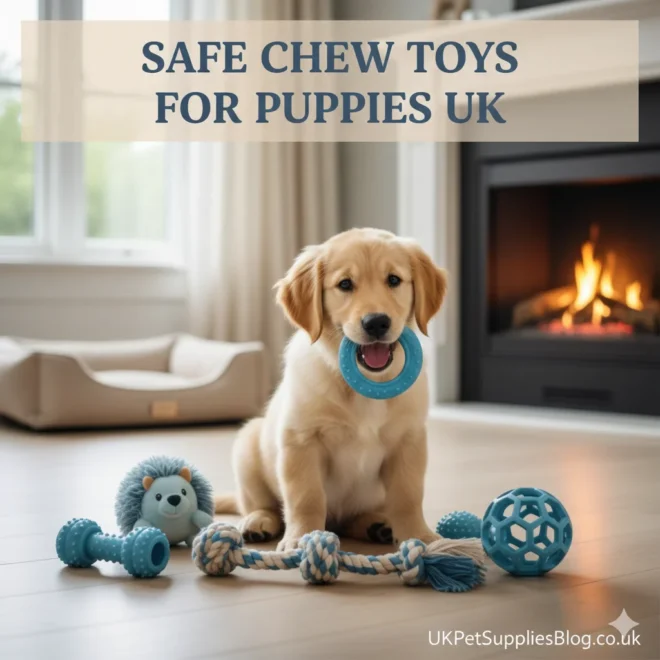
- Puppy‑specific rubber toys, such as KONG Puppy, which are softer than adult versions and can be stuffed with food.
- Nylon puppy chews that are clearly labelled for puppies, such as gentler versions of Nylabone or Benebone, are used under supervision.
- Soft rope toys from reputable UK brands, as long as you remove them once they fray heavily to prevent swallowing strands.
UK retailers like Pets at Home, the PDSA Pet Store and vet‑linked online shops stock vet‑approved puppy toys, which is a good sign they meet safety standards.
What chews can a 12‑week‑old puppy have?
For most 12‑week‑old puppies, stick to:
- Soft rubber puppy toys
- Puppy‑labelled nylon chews
- Soft, supervised rope toys
- Carefully chosen natural chews suitable for puppies, such as some softer plant‑based or air‑dried options from UK natural treat specialists.
Avoid very hard chews, large animal bones and antlers at this age, as they can crack delicate teeth.
What about bones and harder chews?
Many owners still think real bones are the ultimate dog treat, but modern veterinary advice is far more cautious. Very hard items such as cooked bones, weight‑bearing raw bones from large animals, antlers and rock‑hard nylon toys can fracture a puppy’s teeth.
Some natural brands now offer gentler, plant‑based or composite chews marketed as safer alternatives to traditional nylon bones, including options launched into UK stores through chains like Pets Corner. If you are considering any bone‑style chew, ask your vet whether the specific product and hardness are suitable for your puppy’s age, size and chewing style.
Vet‑recommended styles of puppy chews
Veterinary organisations and pet charities consistently highlight a few toy types as safer, especially for young puppies:
- Soft to medium rubber toys that flex slightly under pressure
- Treat‑dispensing toys that encourage licking and gentle chewing rather than frantic gnawing
- Well‑made fabric and rope toys should be used only under supervision, checked regularly for damage
UK charities such as Blue Cross and PDSA also recommend interactive toys like rubber rings, balls and tug toys that combine play and chewing, helping channel energy in a positive way.
What do vets recommend for puppies to chew?
Vets usually advise:
- Picking toys specifically labelled for puppies
- Choosing toys with some “give” rather than rock‑hard materials
- Making sure the size matches your puppy’s breed and age
- Offering a mix of comfort chews and enrichment toys to prevent boredom
Many UK vet practices now run their own online shops or partner with schemes like The Pet Health Club, where their teams hand‑pick suitable chew toys and teething aids.
Best things for teething puppies to chew
Teething puppies benefit most from toys that massage gums and can be cooled to ease inflammation. Rubber toys that can be stuffed and frozen are especially useful during hot British summer spells or after lively play in the park.
Top options include:
- Fillable puppy KONG‑type toys, frozen with a smear of xylitol‑free peanut butter or soaked kibble
- Puppy teething rings or pacifier‑style toys with raised nubs that gently rub the gums
- Damp rope toys briefly chilled in the fridge (not rock‑hard frozen) for soothing, supervised chewing
In wetter, colder months, when walks are shorter, rotating a small collection of teething toys keeps indoor time interesting and reduces frustration chewing.
Natural chew options for puppies
Many UK owners now prefer natural chews, provided they are gentle enough for puppies and ethically sourced. Look for products specifically labelled as suitable for young or small dogs, and always introduce them gradually.
Examples of puppy‑friendly natural options include:
- Softer plant‑based or composite bones that avoid traditional plastics and petroleum‑based nylon
- Air‑dried natural chews designed to be more flexible and less brittle, from UK companies specialising in natural treats
- Eco‑friendly fabric toys made from jute, cotton or recycled materials, which provide chewing satisfaction without harsh chemicals
Shops like Proper Natural and eco‑toy brands such as Green & Wild’s offer UK‑made or UK‑stocked natural chews, but you should still supervise use and remove any pieces that start to break away.
What not to give a teething puppy
Some items are best avoided entirely, even if they are widely sold:
- Cooked bones (especially poultry bones) – can splinter and pierce the mouth or gut
- Very hard chews, antlers and heavy-weight-bearing raw bones – risk of tooth fractures
- Cheap plastic toys that smell strongly or feel brittle – higher risk of breaking into sharp pieces
- Human items like children’s toys, socks or old shoes – confusing for training and often unsafe materials
Stuffed toys with loose eyes, beads or squeakers are risky if your puppy is a shredder; choose well‑stitched toys with reinforced seams and check them often.
Simple “rules” to keep chewing safe
While different trainers talk about rules like “3‑second” or “10‑10‑10” to structure puppy training, the most important chewing rules are practical safety habits. Short, supervised chewing sessions and regular toy checks go a long way.
Helpful safety habits:
- Rotate toys daily so your puppy does not fixate on just one chew
- Inspect toys after each play session and bin damaged ones promptly
- Match chew time to age and energy – several short sessions are better than one overly long one
- Teach a reliable “drop” cue so you can easily swap unsafe finds (like stones or sticks) for a proper chew
These habits protect your puppy’s teeth and prevent emergency vet visits from swallowed foreign objects.
Everyday UK examples and buying tips
In the UK, you can find safe chew toys for puppies through:
- Large chains like Pets at Home and Pets Corner
- Charity‑linked stores, such as PDSA Pet Store or Blue Cross, recommend products
- Specialist online retailers focusing on natural chews and eco‑friendly toys
Look out for descriptions such as “puppy teething toy”, “vet‑approved” or “suitable from 8 weeks+”, and check size guides before buying, especially for larger breeds like Labradors and German Shepherds.
Safest things for puppies to chew on
Putting everything together, the safest things for puppies to chew on are:
- Soft or medium‑soft rubber toys explicitly made for puppies
- Puppy‑specific nylon chews used under supervision
- Well‑made rope and fabric toys are inspected regularly
- Carefully selected natural chews designed for young dogs, from reputable UK brands
Alongside good chews, remember that training, mental stimulation and adequate exercise are just as important, especially for energetic British breeds that love long walks across moors, beaches and parks when the weather allows.
Conclusion: choosing safe chew toys for puppies UK
Choosing safe chew toys for puppies in the UK comes down to soft, puppy‑specific materials, careful supervision and buying from trustworthy brands and vet‑approved stores. By combining rubber teething toys, gentle natural chews and fun enrichment games, you can protect your belongings, support healthy teeth and help your pup grow into a calm, confident adult dog.
If you found this helpful, check out our guide on healthy dog treats to pair with your puppy’s chew toys and make training sessions even more rewarding.